Friday, September 20, 2013

Low trading volume doesn’t matters,Fundamental does!


A good question was posted to me in the Chat-Box column of stocks-unleashed.com by a familiar regular user “Oldman”. was referring to a stock called Mercury Industries Berhad.

Oldman asked : How would you interpret a counter with no volume?

First, thanks for being one of my readers in http://kassimsthoughts.blogspot.com. I am gladly surprised that my pageview has been rising gradually by the days.

So if you are an investor going to invest in a company in Bursa Malaysia, what is the most important criteria one should be looking for? Or shall I say more than one criteria?

The answer lies in the strong fundamental business of the company, for without it, the company would be struggling and could be heading nowhere, but south (meaning the share price heading that way) eventually. But on the other hand, a company with a strong fundamental basis would be doing constantly good business, hence transferring it into good profit and eventually reflected in its stable share price.

Of course, the good quality of the management and the ability of the company’s business product to stay relevant are also very important. No point selling a product that eventually becoming absolute in the future.

When I first set my sight on Mercury 20 month ago, I also noticed that the trading volume was very low and the buying and selling bid’s spread was more than 5 sen. Buyers putting in to buy at 86 sen and sellers wanting to sell at 92 sen. Sometimes for several days, not a single transaction was done. Even if there is a transaction done, the volume would be just a few traded lots done. But that didn’t bother me one single bit. I am a very patient investor. I will wait and wait for days and even weeks or even months to buy at the price I wanted. We all know that Bursa Malaysia is full of weak retail investors. At the slightest news of something bad occurring anywhere in the world and you can see the  market is full of sellers the very next day. Their motto is very simple. Sell first regardless of the good companies’ share they are holding.

Eventually my patience paid off. I managed to buy 15,500 shares at around 86 sen in one day.

Fast forward to today, the low trading volume of Mercury Industries Berhad continues. Hardly any trading done sometimes for several days. After my blog on Mercury was posted, there was not a single transaction done for that week. But there were buyers wanting to buy at between RM1.13 - RM1.20 and sellers wanting to sell at between RM1.25 - RM1.30. Why is the selling and buying price’s bid now higher than the first time I bought them?


Fundamental of Mercury is stronger and richer today
than 2 years ago


The answer is simple. The Mercury of today is different from the Mercury of some 2 years ago. Its cash per share is now almost 40 sen compared to less than 20 sen 2 year ago. Although it is business as usual, the company is now a richer one. Its earning has been quiet consistent at around 16 sen per share. To put it in a simple term, its fundamental is now stronger and therefore, there are now investor willing to buy at around RM1.20 (compared to around 86 sen) and sellers willing to sell at around RM1.30 (compared to around 90 sen) two years ago. Mercury’s valuation is richer today.

Another good point the writer likes about Mercury is its simple business model which is easier to comprehend. Mercury is not necessary better at making more money than other complicated business models, but Mercury’s business is much easier to understand. In fact, its business can be described as nothing special and very boring. But it is exactly this type of boring stock with quiet predictably earnings that I am sure the great Warren Buffet would love to have in his portfolios.

I would be very happy if Mercury maintains that kind of earning for the next several years. Imagine again in ten years time, with Mercury’s cash per share rising to around RM1.20, if you a Mercury shareholder and you wish to sell its share, would you sell at RM1.30 or more?

In conclusion, a good investor should not be worry at all about the no trading or low trading volume of a particular stock. The law of nature will always prevail in the end. The new buying and selling’s price demand will automatically adjusted itself in line with the new fundamental strength of the company.

Here is a short simple true story about a low rise three room ground floor apartment in Taman Sri Nibong, Penang sold for RM300,000 in May 2010. Last year another ground floor unit next to that unit was sold for RM400,000. In between these three years’ period, no other ground floor was sold other than this two units. Hardly any buying and selling volume, right? But see, the price went up by more than 33% in three years’ time regardless of “any volume or no volume at all”.

The moral of the apartment’s story (if there is one) is : The new buying and selling’s price demand will automatically adjusted itself in line with the new fundamental strength of the property market.


Selling Pharmaniaga Bhd

Regular readers of the popular website stocks-unleashed.com would have noticed as early as last year when I started posting my personal views on certain stocks in short paragraph in the Chit-Box column from time to time. At that time, I was calling for a buy on Pharmaniaga when its share price has dropped to below RM8 from a high of almost RM11. Since then, Pharmaniaga has implemented a share split of 1 for 2 and then followed by a bonus issue of 1 for 10 0n May 2013 (Pharmaniaga also implemented a bonus issue of 1 for 10 0n February 2012).

The writer bought 2,000 shares of Pharmaniaga Bhd at RM4.33 on February 22nd 2010. At that time, it was trading at around RM4.30 plus, considered a high price. But I felt that it was expanding its market in the Middle East and Southeast Asia, particularly, Saudi Arabia, Indonesia, Myanmar and Vietnam.

As its Chairman Tan Sri Lodin Wok Kamaruddin said the company was looking for growth opportunities in these countries including through mergers and acquisitions.

Another good point is its good dividend payouts. Around a total of RM2,682 in dividends must have been credited into my bank account since my purchase.

On September 12th 2013, the writer sold his 4,840 shares of Pharmaniaga at RM4.77 (My original 2,000 shares has ballooned to 4,840 shares following the two bonus and 1 share split exercised).

The proceed is RM23,134.72 (4.77 x 4,840 shares).  Minus my cost RM8,723.56 (buying price cost plus broking fee) gave the writer a profit of RM14,241.40 and plus the dividends of around RM2,682 received, the net profit is RM16,923.40.  Not bad for an investment period of 3 years and 7 months which earned a return of 194% returns for an original investment of RM8,723.56.

The writer is positioning himself to purchase other “small” capitalized companies that he feels are trading at undemanding levels, making reasonable profits, in a cash-rich position and most important, paying out regular dividends.

The search for the next undiscovered “Pharmaniaga” or “mini Public Bank” is still on apart from Mercury Industries Berhad.


Tuesday, September 3, 2013

Walk The Talk with Mercury Industries Berhad With Me. Dare You?


Walk The Talk with Mercury Industries Berhad With Me. Dare You?


Traffic jams are getting worse and worse by the days. So much so that I know of  many people checking on the internet about the traffic flow before going off from the office. Who likes to be stuck for one hour or more when it normally takes only a 15 minute's drive? Imagine crawling inch by inch and burning precious petrol for the extra 45 minutes going through stress and frustration. Worse still if one suddenly feels the urge to answer to the call of nature.

The reason is very simple. There are just too many cars on the roads. No thanks to an explosive new cars sales recorded in 2012. Volume surged 33% to 611,000 vehicles, 6,000 more sold in 2011. The local manufacturers association (MAA) released a 2013 forecast of 634.000 units which looks quite conservative, in a country with a still low circulating car park and a GDP expected up 5.6%.

Also with the prices of cars going cheaper by the days, the 2013 forecast seems a foregone conclusion. Who could have imagined a Honda Jazz being sold at less than RM75,000.00 today?


Mercury Industries Berhad

The good car sales business is good for one "very small company" called Mercury Industries Berhad, Malaysia's 2nd largest car paint producer. The company is principally involved in the manufacture and trading of automotive paints and other related products used in the auto refinish industry.  Mercury's products cater mostly to the auto refinish industry which is demand-resilient. Therefore, its revenue will not be greatly affected by the economic conditions of the country.

I said "very small company" because Mercury has only a share base 40,182 shares owned by  2,277 individuals according to its 2012 Annual Report. The top thirty largest shareholders hold collectively 79.79% of the shares. So the famous phrase of "less men more share" couldn't be more true this time. Its 2012 Annual Report showed that it has a cash hoard of RM12 million and zero debts.

On August 30th 2013, Mercury announced its 2nd Qtr 2013 results. Predictably, the 1st half year's earnings was around 8 sen plus, almost the same as the few previous quarters. But the cash in the kitty has risen to almost RM16 million, thus increasing its cash per share to almost 40 sen!

During the last three years, Mercury has been earning an average of 16 sen per share. It has also rewarded shareholders with three 8 sen dividend as well. What if it continues to do the same for the next ten years?

Yes, this is the good part I am coming to. ASSUMING for the next ten years, the earning of 16 sen remains the same. The 8 sen dividend payout each year remains the same for the next ten years.  ASSUMING bank's fixed deposit rate of 4% per annum remains the same for the next ten years.

The current share price of Mercury is about RM1.20.

RM1,200 deposit in a bank
An deposit of RM1,200 would earn RM48 a year based on the Bank's fixed deposit rate of 4% annum. A ten year period would earn the depositor a total of RM480 and nothing else!

Investing in 1,000 Mercury's share at current price of RM1.20.
The investor paying RM1,200 for 1,000 Mercury shares will receive a dividend of 8 sen or RM80. A ten year period would earn the investor a total of RM800. (That is RM320 more!)

But that is not the end. Remember, Mercury is earning 16 sen each year. Minus the 8 sen dividend and there is still a 8 sen balance with the company. A ten year period and that 8 sen would snowball to 80 sen (RM800) per share! Plus the existing 40 sen and that would be RM1.20 (RM1,200) cash per share! Can Mercury still be trading at RM1.20 which is the same as its cash per share in ten year's time? My experience with cash-rich stocks is that as its cash hoard keeps increasing over the years, its share prices also follow up automatically. Its share price has to be traded above RM1.20.

Still back to Mercury's share in ten years' time, its cash per share of RM1.20 still belongs to that 1,000 Mercury shareholder!  Imagine if the company decides to payout that amount as a special bumper dividend or increase its' annual dividend from 8 sen to a higher amount.

By then what will happen to the share price? Will Mercury's share price still be at RM1.20? Logic tells us that when a company's cash per share keeps on rising each year, its' share price will also keeps heading north each year. What will you do if you are the major shareholders? Take it private? Declare a big dividend payout? Do nothing? Try doing nothing and surely it will attract predators coming in to take over the company or building up a big stake to have a big say in the direction of the company.

Look recently what nearly happened to icapital berhad, a closed-end fund? With too much cash and not putting it into investment, it attracted fund that was eyeing its cash pile. Recently, it announced a special dividend payout for the first time since its listing on October 2005. According to a report, the special dividend was paid out because it wanted to utilise the tax credits under the Section 108 of the Income Tax Act, 1967 which will expire on 31 December 2013.


Walk The Talk

Yes, I am convinced that Mercury is a good long term bet and as such, I will walk the talk and not the other way round. No point saying something is so good when one did not even own or purchase it. Although I had already purchased 15,500 shares of Mercury bought at RM0.86 on December 12th 2011, it wouldn't be fair if I keep on introducing Mercury as a good investment if I do not purchase additional Mercury shares at around current price.

Therefore, I have decided to be in the firing lines of my words by buying another 11,000 shares of Mercury (bought at RM1.15 on August 28th 2013) to add to my existing 15,500 shares. It takes a lot of guts to buy shares in this severe market downturn, but that is what I call buying with conviction regardless of market conditions especially when others are selling. Together I now hold 26,500 shares of Mercury.

Time will tell if I am right or wrong. In the meantime, anyone dares to be with me with Mercury ... for the next ten years?

The recent market downturn.

Questions from "Layman" regarding the recent market downturn.
How do you perceive the current downturn trend?
Any KLSE entry point for consideration?

This is what I wish to share with "Layman".

Market will always go up and down from times to times due to a lot of various factors which you and I cannot control at all. For me, one must have an entry price for a particular stock which one has been aiming for some.

For example stock A has been trading at a price range of between RM2 to RM2.50 which you are not willing to pay for it. Suddenly it came down to RM1.70, will you buy? Buy at a decided price regardless of market conditions. Buy even more if your decided price stock bought goes down lower.

If you are confident of that stock (which I presumed you have done the homework), then you have nothing to fear.


Friday, August 23, 2013

The next “mini Public Bank” company. I Have. Have you?


The next “mini Public Bank” company.
I Have. Have you?


Most investors must have wished that they had bought some Public Bank shares in the early days when it was listed in 1967. Or perhaps at some point of times.  One thousand shares of Public Bank at that time would have turned into over several thousands shares as at today and when you multiply the current share price of RM17, the value would be over more than RM1 million today for that investor, not to mention the thousand and thousand of dividends received. (Provided the original investor possessed the “heart of steel” to hold on over a period of 46 years!)

In my personal opinion, not many people would be able to do that. Imagine during the 46 years’ period, there were so many world crisis now and then that would have emotionally influenced that investor to sell the shares at some point of times. The 2008-2009 world global credit crunch would have given that investor with the so-called “heart of steel” many sleepless nights wondering if it was better to dispose off the shares for whatever profits left or to just hang on and hope for the best or face the reality of  seeing his paper profit’s value decreasing. Over during this long period, the investor must not be in an urgent situation for need of urgent cash, too.

There is this one very good friend of mine who bought 2,000 shares of Public Bank about 15 years ago at less than RM2.00. But because he was just a novice, he was constantly affected by the movement of the composite index that he had to check with his remisier every half an hour about his share prices. Eventually the emotion got over him and he sold off his shares at almost the same price after several months. In fact, I had to ask for his permission to write this. He laughingly agreed provided his name is not mentioned.

Then again, that investor if he is around today must be over in his late 60s or 70s or even 80s years old. Shares that provided an investor with such “monsters’ returns” are hard to come by. Perhaps once in a lifetime opportunity. To put it in a simple way, finding the next Public Bank is like finding a needle in a haystack if you know what I meant by that.

But if one has been observant enough, there were actually many mini “Public Bank” companies too in Bursa Malaysia. Some examples are Nestles, Dutch Lady, Hartalega, Top Gloves, Genting and Digi and many mores. (For Digi, surely Tan Sri Vincent Tan of Berjaya Group would vouch for it). If only one had invested just one thousand shares in most of these companies at IPO prices or even post-IPO prices. He would surely need a doctor to stop him from laughing non stop every day and all the way to the bank whenever he sees his shares’ price rising and receiving tons of cash dividends now and then.

The writer has been fortunate enough to own a  “mini Public Bank” company. No right, no wrong, this is the writer’s own version of his “mini Public Bank” company.

Keck Seng (M) Berhad

More than a decade ago, when I was always hungry searching for investments reports of companies, I chanced upon an article on Keck Seng (M) Berhad in the Sunday Mail column. Those days, Sunday Mail would featured an article upon a certain company each week. At that time, the article introduced Keck Seng as an asset rich company with plenty of lands in Johore and is engaged in the cultivation of oil palm, processing and marketing of refined palm oil products, property development, property investment and share investment holding. The Company operates in four segments: manufacturing, hotels and resorts, property and plantation.

So  I went on to purchase my first 1,000 shares of Keck Seng at RM1.65 on Nov 2nd 1999. It was on behalf of my spouse and she had some spare money to invest. And I went on to purchase an additional 5,000 shares (for my ownself) when the price kept going down all the way over the next few years. (Prices bought were at RM1.34 on June 5th 2002, RM1.38 and RM1.39 on June 14th 2002, RM1.22 on Oct 9th 2002 and RM1.20 on Feb 21st 2003). In fact the share prices went below RM1 for quite some times and stayed there for long period after my total purchase of 6,000 shares). Surely I must have regret for believing in that Sunday Mail’s article! Surely Keck Seng wasn’t a nice words to mention about when discussing about investment with my spouse.

But over the next several years, Keck Seng’s investment into securities appreciated more and more apart from their regular business. Each year when I read its annual report, I noticed that its investments values were increasing and increasing! Slowly and surely, the share prices was also increasing every year.

Land’s prices in Johore was also becoming more and more expensive. Yet most of Keck Seng’s land were valued at its original prices, way below the current market’s value. Keck Seng was attracting the attention of several research houses and  it was quite common to see an article of Keck Seng in The Star, The Edge or even the Chinese newspapers being featured now and then. (The writer still keeps stacks of Keck Seng’s articles in his library).

Keck Seng could declare a bumper dividend of RM359m or 96 sen/share by virtue of its section 108 balance which will be expiring by December 2013. Keck Seng will be better off making full use of the credit balance as any unutilized credit balance will be forfeited.

Perhaps one of Keck Seng’s major move was investing in Parkway shares that netted them nearly RM260 million when Parkway shares were eventually taken private a few years ago. Keck Seng, majority owned by Ho Kian Guan and family from Singapore, is also a very conservative company and its average dividends payout is about 10 sen per year.

On July 6th 2010, I sold off my 5,000 shares of Keck Seng at RM4.96 when I needed some money for a major purchase item. That was before Keck Seng implemented a one for two bonus shares exercise. The reason I did not sell all was because that  1,000 shares belonged to my spouse! (Luckily for her and unluckily for me) because post after the one for two bonus shares exercise, the 1,000 shares has now increased to 1,500 shares multiplied by the current shares prices of RM5.35 that is worth about around RM8,000.

Minus out the last 13 years of dividends received and you can see that the RM8000 is almost free. Twenty years from now, how much will the share price of Keck Seng be? There could be more bonus exercises, bumper dividends or perhaps a privatization exercise. By then, the writer will be in his early 70s, hopefully if he is still there by then.

Have you got any “mini Public Bank” company’s story to share with? The writer and many other readers would be very happy to hear from you.

Hup Seng Industries Berhad

Incidentally by the time I was writing this article, another “Seng” has just released its second quarter results. Hup Seng Industries Berhad announced an earning of 8.92 sen bringing its first half yearly earnings to 16.34 sen. Investors including this writer would be happy that the company is rewarding shareholders with a 15 sen dividend to be paid at a later date.

The writer can be contacted by his email  at kassim123888@gmail.com


Friday, August 9, 2013

Customer-turned-Stake Holder of YSP Sah


Customer-turned-Stakeholder
of YSP Sah.


Backache is common among us and is no exception for my spouse.

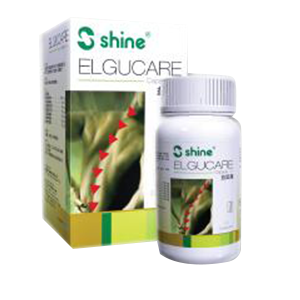
For several years, she experienced irritating back pain on the back now and then. A good friend introduced her to try on a capsule supplement formulated herbs traditionally used for relieving waist ache and backache, it is called Elgucare. The main pharmacological effects are dilating the blood vessels to improve blood circulation, restring the fibro-elastic potential of vertebral cartilages and improving immune system. She tried and after a period of time, her pain was gone. And so from time to time, whenever she felt some pain, I would go to the pharmacy to purchase Elgucare capsule again.

However early last year as I was doing some house cleaning, I chanced upon some Elgucare bottles and out of curiosity, read the label and discovered that it was distributed under the famous brand "Shine" by a company called YSP Southeast Asia Holding (YSP Sah).

That led me to start doing a research on the company. And what I found out interested me more and more. It was a simple profitable small company. It was a cash-rich company. It was consistently paying regular dividends year after years. And it was consistently making profits year after year including even at the peak of the US credit crunch crisis in 2008/09.

Most important, YSP Sah was only traded at only RM1.04 at a low PER at that time. At such a low price, the dividend of RM60.00 is almost a near 6%, much higher than the bank's fixed interest rate. How could I missed out such a good company for so long having been its regular customer (buying the Elgucare for my wife) for so many years?

Incidentally, YSP Sah shot into the attention of the investing public when it was mentioned in the hugely followed blog of SERIOUS INVESTING on May 22, 2013. The title was: "YSP: You Shall Pass?" SERIOUS INVESTING's Felicity gave some detailed account of the company and bought 7,500shares of YSP Sah at RM1.17.

Then on July 15, 2013, YSP Sah was again in the spotlight, this time The Edge publishing a more than half page article entitled: "YSP overlooked by investors". In that article, YSP Sah's president and group managing director Datuk Dr Lee Fang Hsin said the company was fortunate enough to go into the Indonesian market early when it opened up its pharmaceutical industry and allowed full foreign ownership. Soon after that, the Indonesian government closed the window of opportunity for the late comers. Indonesian is a much bigger market than Malaysia. Even Pharmaniaga is also entering the Indonesian market albeit a bit late. (But better be late than missing out this huge market opportunity).

YSH Sah is expanding its foothold in Asean. It has branches in Singapore, Vietnam, Myanmar, Cambodia and Indonesia and is now looking to expand by setting up new manufacturing plants in Indonesia and expanding its capacity in Vietnam. However, Malaysia still remains the key contributor. Although YSP Sah in still in a growth stage that requires capital investment, its dividend policy of 50% remains.

Going by its strong 1st Quarter 2013's results of eps of 3.34sen, a dividend of 6.5sen or 7sen is expected for investors next year.

The writer bought 10,000 shares of YSP Sah on June 5, 2012 at RM1.05. To date, he had received two dividends totaling RM1, 250.00 (RM600.00 on August 22, 2012 and RM650.00 on August 5, 2013). Currently the share price has appreciated to around RM1.40 at the time of writing.

Readers are welcome to share investing ideas and experience with me.
My email is kassim123888@gmail.com